
Table of Contents
- How to Choose Balloon Colors for Events Using the 60-30-10 Rule
- Balloon Color Psychology: What Each Shade Says at Your Party
- Balloon Color Combinations for Parties and Organic Balloon Decor Benefits
- Matching Balloon Colors to Event Themes
- Corporate Branding and Color Matching
- Indoor vs. Outdoor Lighting Considerations
- Metallic and Chrome Finish Applications
- Creating Cohesive Color Palettes
- Seasonal Color Trends
- Budget-Friendly Color Layering
- Frequently Asked Questions
Last Updated: September 16, 2026
How to Choose Balloon Colors for Events Using the 60-30-10 Rule
Choosing balloon colors for events starts with the 60-30-10 rule: 60% dominant, 30% secondary, 10% accent. And Why Not Balloons’ CBA certified artists have used this framework since 1997.
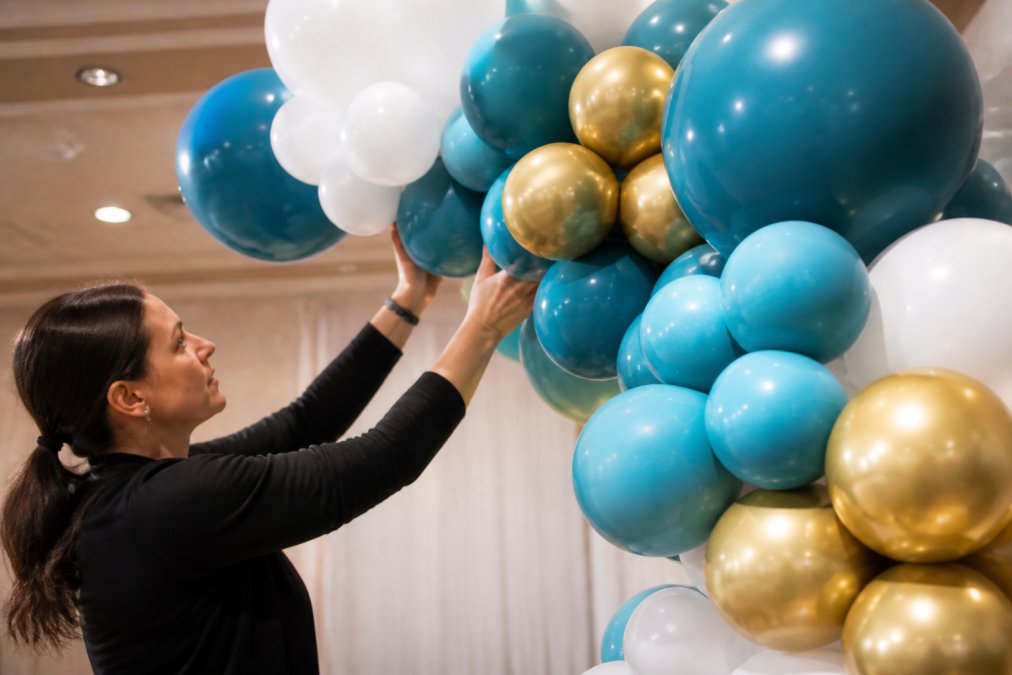
Pick your dominant hue first, choose a secondary that complements it on the color wheel, and reserve your accent for small details like ribbon or metallic sheen.
When in doubt, pull your dominant color from the venue itself. If the room has warm wood tones, a warm dominant color blends instead of fighting the space.
Balloon Color Psychology: What Each Shade Says at Your Party
Balloon color psychology studies how hues influence mood: warm colors like red, orange, and yellow feel energetic, while cool colors like blue, green, and lavender read as calm and elegant.
| Color Family | Emotional Effect | Best For |
|---|---|---|
| Red, orange, yellow | Energetic, festive | Birthdays, grand openings |
| Blue, green, teal | Calm, trustworthy | Corporate events, baby showers |
| Pink, lavender, peach | Soft, romantic | Milestone celebrations, bridal events |
| Black, gold, silver | Formal, dramatic | Galas, milestone birthdays |
Color theory for accessibility deserves more attention than it usually gets.
Choose your palette under the same lighting conditions as your venue. A color combination that works in daylight may fall flat under tungsten or LED event lighting.
Balloon Color Combinations for Parties and Organic Balloon Decor Benefits
Balloon color combinations for parties work best with one dominant, one secondary, and one accent, navy and gold with white for corporate branding, blush pink and sage green with cream for milestones, red and turquoise with yellow for children’s birthdays.
Skipping a dominant color in an organic installation is the fastest way to make expensive decor look accidental. Anchor the design with one hue before adding variety.
Matching Balloon Colors to Event Themes
Matching colors to a theme means pulling your palette from the theme’s visual language, a jungle party draws from greens, browns, and a pop of orange, then translating that into three colors using the 60-30-10 ratio.
Corporate Branding and Color Matching
Corporate branding and color matching require precision: request the brand’s official hex codes, match them as closely as inventory allows, and use neutrals like white or silver to bridge gaps. Treat the brand’s primary color as your dominant hue, its secondary as your 30%, and a metallic or neutral tone as your 10% accent.
Indoor vs. Outdoor Lighting Considerations
Indoor and outdoor installations behave differently under light: sunlight brightens and saturates colors, indoor ambient lighting can mute or warm them, and outdoor UV exposure speeds up oxidation. Choose deeper base colors outdoors; test your palette under the venue’s actual lighting indoors.
Metallic and Chrome Finish Applications
Metallic and chrome finish balloons add reflectivity flat latex can’t match, functioning as a natural accent when used sparingly. Pair a soft matte dominant color with a small percentage of chrome accents for depth without visual noise.
Chrome and metallic balloons show fingerprints and smudges more than matte latex. Handle them with clean gloves during setup if you want a spotless finish in photos.
Creating Cohesive Color Palettes
A cohesive color palette gives every color a clear job: dominant, secondary, or accent. Use a color wheel to check combinations, analogous colors create a calm, unified look, complementary colors create high contrast, and monochromatic palettes use one hue in varying shades. Mastering these foundational relationships allows for the development of sophisticated custom color palettes that elevate the visual impact of any event design.
Cohesion is about proportion and repetition, not color count. Three colors used consistently beat five colors used randomly.
Seasonal Color Trends
Seasonal color trends follow the season’s natural colors: spring and summer lean bright and pastel, fall favors warm earthy tones like rust and deep burgundy, and winter uses cool tones and metallics. If a seasonal palette doesn’t match your theme or brand, build a custom one instead.
Budget-Friendly Color Layering
Budget-friendly color layering builds visual depth with fewer, cheaper balloon types. Layer colors by size instead of finish: large dominant-color balloons, medium secondary-color balloons, and small accent-color balloons create depth through scale at a fraction of the cost. Double-stuffing, placing one balloon inside another, creates custom shades and gradients using balloons you already have.
Double-stuffing adds weight and reduces float time. If your event runs long, plan for this trade-off rather than discovering it mid-event.
Frequently Asked Questions
What are the best balloon color combinations for parties?
The strongest balloon color combinations for parties follow the 60-30-10 rule: one dominant color, one secondary color, and one accent. Popular pairings include navy and gold with white accents, blush and sage with cream, and black and white with a bold pop like red or teal. Choose colors that match your event theme and venue lighting. Matte finishes soften the look, while chrome or metallic sheen adds contrast for evening celebrations.
How does balloon color psychology influence event decor?
Balloon color psychology shapes how guests feel when they walk in. Warm hues like red, orange, and yellow create energy and excitement, which suits birthdays and grand openings. Cool tones like blue, green, and lavender calm the room, making them a fit for corporate events and milestone celebrations. Neutrals like white, cream, and taupe add elegance without competing with your other decor. Pick shades that match the mood you want guests to feel.
How many colors should be in a balloon arch?
Three colors is the sweet spot for most balloon arches. One dominant color covers roughly 60 percent of the design, a secondary color fills about 30 percent, and an accent color takes the final 10 percent. Fewer than three colors can look flat, while more than four creates visual clutter. If you want a monochromatic look, use three shades of the same hue, such as light pink, rose, and burgundy, to keep depth without adding new colors.