
Table of Contents
- Latex vs. Foil Balloons for Outdoor Events
- How to Prevent Balloons From Popping in the Sun
- Balloon Arch Outdoor Setup Tips
- Frequently Asked Questions
Last Updated: September 29, 2026
Latex vs. Foil Balloons for Outdoor Events
Latex balloons are made from natural rubber, affordable, and customizable with printing, but their porous material deflates faster outdoors due to temperature fluctuations and UV exposure.
Foil balloons (mylar) hold helium longer and resist UV damage, but cost more and catch wind more easily than latex.
For multi-hour outdoor events, foil balloons outperform latex; for custom designs, use latex with UV-protective treatments.
How to Prevent Balloons From Popping in the Sun
UV rays cause latex to become brittle and lose elasticity; the best types of balloons for outdoor events include those with UV-protective coatings or crystal latex.
Inflate balloons close to event time, position arches in partial shade, use helium-grade balloons, and apply UV-protective sprays for afternoon events.
Temperature swings weaken balloon material; plan backup balloons for sunrise-to-sunset events.
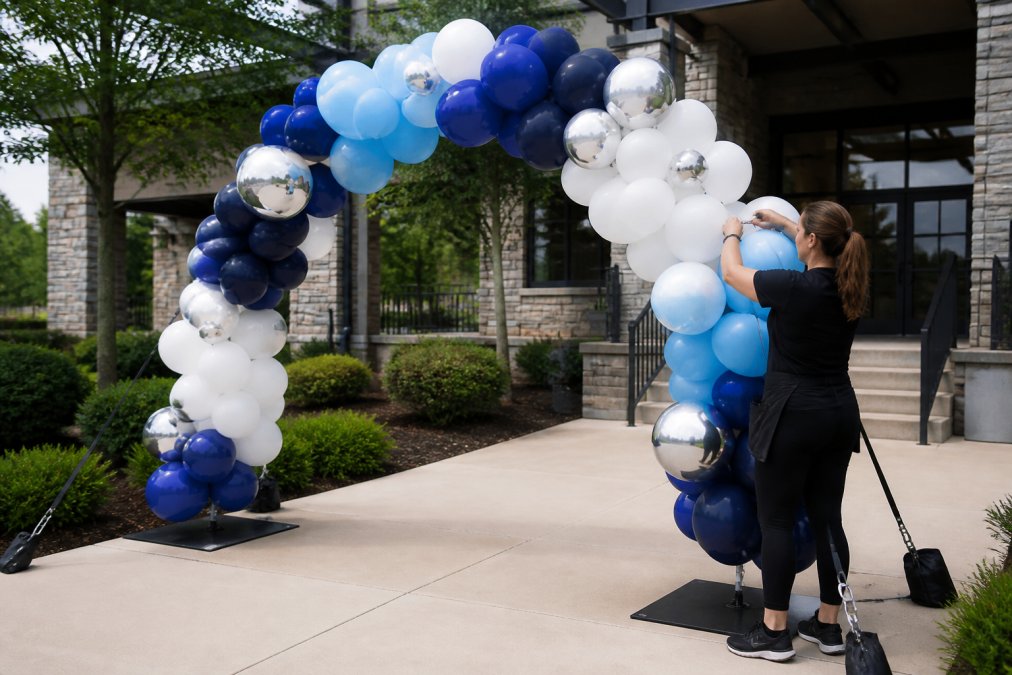
Balloon Arch Outdoor Setup Tips
Balloon arch installation requires mixing foil (heavier, at base) and latex (lighter, higher up) for proper weight distribution and wind resistance.
Anchoring systems are critical. Use ground stakes, weighted bases, or guy-lines to secure your arch against wind. Most arches fail not because balloons pop but because they topple. Calculate wind load: a 10-foot arch can catch significant wind force, especially if densely packed with balloons. Spacing matters, don’t overcrowd. Leave room for air to pass through rather than pushing against solid balloon mass.
At And Why Not Balloons, our CBA certified artists handle the full installation and breakdown, ensuring your arch stays stable throughout your event and gets safely removed afterward.
For balloon columns flanking an entrance or stage, the same principles apply: secure the base, distribute weight properly, and account for wind exposure. Test your setup 30 minutes before guests arrive, adjust tension and anchoring if you spot movement.
Planning an outdoor celebration means choosing balloon materials and installation methods that survive sun, heat, and wind. The best types of balloons for outdoor events combine durability with visual impact. Whether you’re managing the setup yourself or bringing in professionals, prioritize anchoring systems and UV protection over sheer balloon quantity. When you’re ready to transform your space into something legendary, And Why Not Balloons brings 25 years of experience and CBA certified expertise to every installation. Book Now to discuss your event vision and get a custom design that lasts.
Frequently Asked Questions
What type of balloons are best for using outside?
Latex balloons work well for outdoor events when treated with UV-protective coatings to resist oxidation and fading. Foil balloons (also called mylar) last longer outdoors and resist popping better in sun exposure. For professional results, choose helium-grade latex or crystal latex balloons with anti-oxidation treatments, or combine both types for visual variety and durability throughout your event.
How do you keep balloons from popping in the heat?
UV-protective treatments and anti-oxidation coatings extend balloon longevity in direct sunlight. Avoid placing balloons in extreme heat above 85°F when possible, and use foil balloons in high-temperature areas since they resist heat better than standard latex. Proper anchoring systems and structural support also reduce stress on balloon elasticity, lowering the risk of premature popping during your outdoor event.
Are latex or foil balloons better for outdoor events?
Foil balloons generally outperform latex outdoors due to superior UV resistance and longer inflation longevity. However, latex balloons offer better customization options and a classic aesthetic. Many professionals use both: foil for durability and structural support in balloon arches and columns, and latex for visual appeal and themed designs. Your choice depends on event duration, temperature, and design goals.