
Table of Contents
- Latex vs Foil Balloons for Arches
- How to Keep Balloons from Deflating During Outdoor Events
- Weighted Balloon Arch Bases and Structural Support
- Frequently Asked Questions
Last Updated: September 17, 2026
Latex vs Foil Balloons for Arches
Latex balloons and foil balloons each bring different strengths to outdoor balloon arches. Latex balloons offer natural elasticity and a classic appearance, while foil balloons deliver superior durability and color vibrancy in direct sunlight.
Latex balloons are biodegradable and cost-effective but prone to UV oxidation, losing shine within hours. Foil balloons (Mylar) resist UV damage and maintain appearance throughout extended outdoor events.
For outdoor balloon arches, foil balloons excel in harsh conditions, they don’t absorb heat like latex and resist thermal stress. Professional-grade foil balloons last days in direct sunlight, while untreated latex fades within hours.
Short events favor either material; all-day or multi-day installations demand foil balloons for reliability.
How to Keep Balloons from Deflating During Outdoor Events
Balloons deflate outdoors due to heat, wind, and weather exposure; air-filled balloons deflate faster than helium-filled ones because air molecules escape through latex more readily.
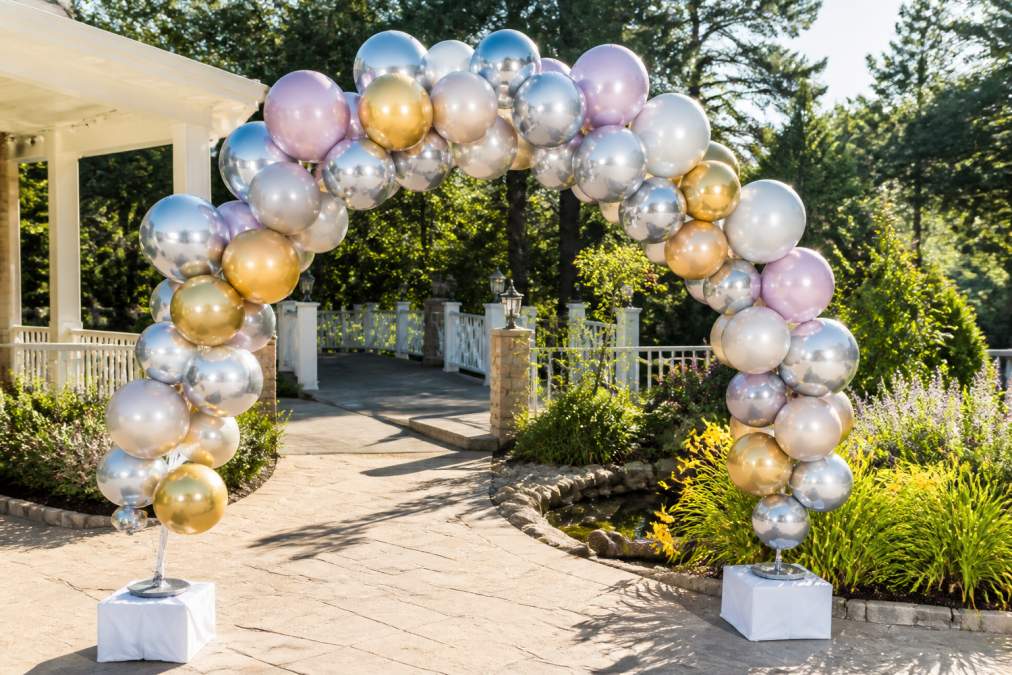
Helium-filled designs last 5-7 days versus 1-2 days for air-filled arches, making helium the better choice for events lasting more than a few hours, though it costs more and requires professional equipment.
Proper anchoring prevents wind-related deflation and popping; weighted bases distribute load evenly and keep structures stable in gusts.
Temperature fluctuations cause balloons inflated in cool morning air to expand as the day warms; professionals inflate 10-15% below maximum capacity to allow safe expansion.
Weighted Balloon Arch Bases and Structural Support
A weighted balloon arch base is non-negotiable for outdoor stability; most professional arches require 15-25 pounds minimum, depending on arch height and balloon density.
Common base options include water-filled buckets (affordable and adjustable), sand-weighted stands, and custom balloon frames designed for outdoor use.
Structural integrity depends on proper weight distribution; unbalanced designs cause tilting and collapse in wind.
Professional installers use balloon frames, rigid structures that distribute stress evenly and keep arches upright through temperature changes and weather shifts. For outdoor events lasting more than four hours, frame-based systems outperform simple anchors.
At And Why Not Balloons, we design custom balloon arch systems with professional-grade frames and weighted bases. Our CBA certified artists account for wind patterns, temperature forecasts, and structural load to ensure your outdoor balloon arches remain stunning throughout your event.
Outdoor balloon arches demand materials and installation methods that withstand sun, wind, and temperature swings. Professional-grade foil balloons, helium inflation, and weighted bases transform a simple decoration into a durable focal point. Work with experienced decorators who understand the engineering behind outdoor balloon installations.
Frequently Asked Questions
How long do balloon arches last outside?
High-quality latex balloons typically last 5-7 hours outdoors in moderate conditions, while foil balloons can extend to 12-24 hours. Longevity depends on temperature, UV exposure, and humidity. Professional-grade latex with UV protection treatments resists oxidation and color fading much longer than standard balloons. Wind, direct sunlight, and heat all shorten lifespan, so placement and anchoring matter significantly for outdoor balloon arches.
What’s the difference between latex and foil balloons for outdoor arches?
Latex balloons are biodegradable and offer natural elasticity for organic arch designs, but they’re more vulnerable to UV damage and heat absorption, causing faster deflation. Foil (Mylar) balloons resist UV rays, maintain shine longer, and hold helium more effectively, making them ideal for full-day outdoor events. Latex excels for aesthetic flexibility; foil excels for durability. Many professional arches combine both for visual impact and structural longevity.
How do I prevent a balloon arch from sagging or collapsing outdoors?
Weighted balloon arch bases are essential for outdoor stability. Use sturdy, heavy bases, typically 10-15 pounds per anchor point, to counteract wind load and the weight of inflated balloons. Secure the arch frame to multiple anchor points rather than relying on a single base. Professional-grade balloon frames distribute weight evenly, and helium-filled designs require more robust support than air-filled arches. Wind-load engineering is critical; avoid placement in direct wind paths when possible.