
Table of Contents
- How Long Professional Balloon Arches Last
- Outdoor Balloon Arch Durability and Environmental Factors
- How to Keep Balloon Arches From Deflating
- Frequently Asked Questions
Last Updated: October 1, 2026
How Long Professional Balloon Arches Last
Professional balloon arches last 5-7 days indoors when properly installed, though lifespan depends on materials, installation quality, and environment. Helium-filled latex balloons deflate gradually, while foil balloons maintain appearance longer.
Latex balloons are porous, allowing helium to escape slowly, while foil balloons have a plastic coating that slows deflation. Professional-grade latex balloons treated with hi-float sealant extend longevity considerably.
Temperature, humidity, direct sunlight, and static electricity all accelerate balloon degradation.
Outdoor Balloon Arch Durability and Environmental Factors
Outdoor professional balloon arches last 2-3 days instead of a full week indoors due to UV exposure, temperature swings, and moisture.
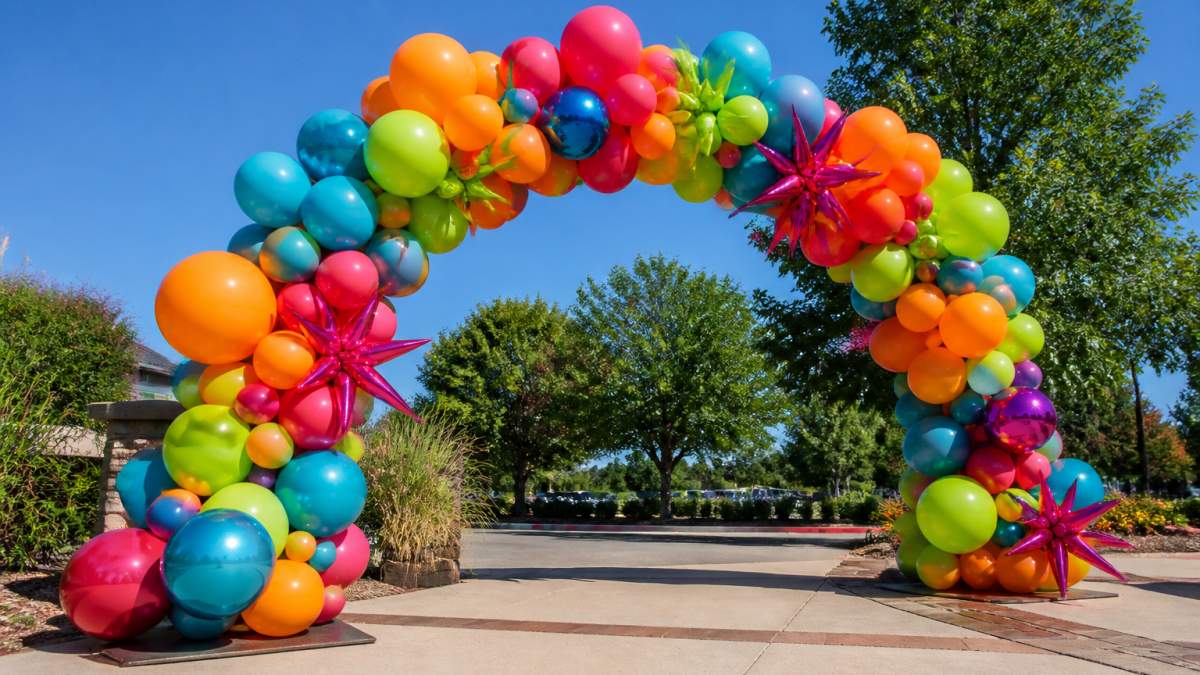
UV exposure degrades latex faster than foil balloons. Heat expands helium and accelerates deflation, while cold causes contraction and reduced fullness.
High humidity speeds latex oxidation, shortening lifespan in humid climates. Wind stresses balloon material and structural supports.
Professional installers extend outdoor durability to 3-5 days by using hi-float treated balloons, selecting foil balloons, and minimizing sunlight exposure.
How to Keep Balloon Arches From Deflating
Prevent deflation with high-quality professional-grade balloons and hi-float treatment, which slows helium escape.
Installation technique matters more than most people realize. Proper balloon sizing ensures even pressure distribution across the arch structure. Oversized balloons create stress points that fail faster. Undersized balloons don’t provide adequate visual impact and may appear deflated within days.
Temperature control is your strongest tool for indoor installations. Keep the space between 65-75°F if possible. Avoid positioning arches near heating vents, air conditioning units, or direct sunlight from windows. Even a few feet of distance from these sources extends lifespan noticeably.
For timing, install your professional balloon arch no more than 24 hours before your event if it’s indoors, or 12 hours before if it’s outdoors. Early installation looks less impressive by event time.
The difference between a balloon arch that looks tired halfway through your event and one that looks legendary all day comes down to choices made before installation even begins. Professional balloon arches deserve professional-grade materials and proper setup. And Why Not Balloons handles the entire process, selecting the right balloon types, applying protective treatments, timing installation perfectly, and managing the setup so your space transforms exactly when it needs to. Get started with And Why Not Balloons and eliminate the stress of wondering whether your decor will hold up.
Frequently Asked Questions
How long do professional balloon arches last indoors versus outdoors?
Professional balloon arches typically last 5-7 days indoors in climate-controlled environments. Outdoors, they last 1-3 days depending on temperature, humidity, and sun exposure. Indoor arches benefit from stable conditions, while outdoor installations face UV degradation and weather stress that accelerates deflation and material breakdown.
What’s the difference between latex and foil balloon durability in professional arches?
Latex balloons last 5-7 days indoors but deflate faster outdoors due to oxidation and UV exposure. Foil (mylar) balloons resist deflation better, lasting 2-3 weeks indoors and 5-7 days outdoors. Professional-grade latex with hi-float coating extends lifespan by several days. For events requiring maximum longevity, foil balloons offer superior durability.
How many days before an event should you set up a professional balloon arch?
Set up professional balloon arches 1-2 days before your event for maximum impact. This timing balances longevity with visual freshness. For outdoor installations in hot weather, set up the morning of the event to minimize UV exposure and heat-related deflation. For indoor events in cool, controlled spaces, setup 2 days prior works well without sacrificing structural integrity.