
Table of Contents
- Understanding Wind Conditions for Outdoor Balloon Installation
- Best Balloon Weights for Outdoor Events
- Balloon Arch Anchoring Techniques for Stability
- Frequently Asked Questions
Last Updated: October 3, 2026
Understanding Wind Conditions for Outdoor Balloon Installation
Wind is the biggest threat to outdoor balloon installations, and these outdoor balloon installation tips for wind require a structured assessment before setup.
Wind Speed Go/No-Go Framework
Under 10 mph requires minimal anchoring; 10-15 mph requires reinforced anchoring with multiple stakes and weighted bases; 15-20 mph requires professional-grade anchoring only; over 20 mph is not recommended. Safe speeds depend on your specific setup, balloon materials, and anchoring method.
Site-Specific Wind Assessment
Wind behavior varies by venue: open fields experience full wind speed, buildings create unpredictable gusts, and elevated surfaces experience 15-25% stronger winds. Always test in your actual installation area. Accounting for these environmental variables requires a careful negotiation of venue installation rules to ensure that your structural design remains both stable and compliant.
Pre-Setup Testing Protocol
Set up two hours early and measure wind speed with an anemometer or by observing flags and trees. Test stability by applying gentle pressure, the structure should resist movement without wobbling. Monitor for 15-20 minutes and reinforce weak points before guests arrive.
Never rely on weather app wind speeds alone. Apps report conditions at nearby weather stations, which may be miles away and at different elevations. Always assess conditions at your actual event site.
Best Balloon Weights for Outdoor Events
Weight systems depend on venue surface, balloon size, and wind conditions. Always combine weights with ground stakes, gaffer tape, and tether lines.
Surface-Specific Anchoring Methods
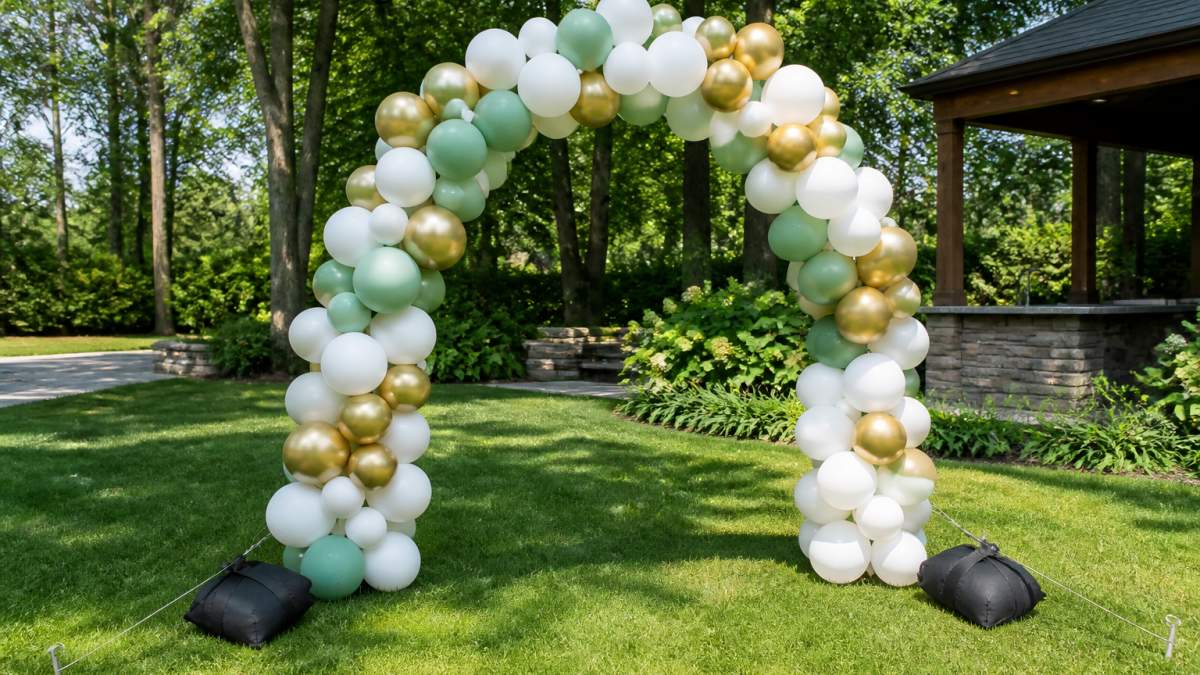
Grass or Soft Soil: Drive 12-18 inch stakes at 45-degree angles with water-filled or sand-filled bases (25-50 lbs), twine at multiple angles, and gaffer tape. Large arches need 4-6 stakes plus weighted bases.
Concrete, Asphalt, or Paved Surfaces: Use sandbags or water weights (50-100 lbs per bag), weighted bases, gaffer tape, and tether lines. Medium arches require 150-250 lbs distributed weight.
Turf, Decking, or Temporary Surfaces: Use shallow stakes (8-10 inches), weighted bases, sandbags, and tether lines. Check venue restrictions on stakes, weights, or adhesives.
A 6-foot latex arch requires 50-100 lbs in 10-15 mph wind; a foil cluster requires 75-150 lbs; a 10-foot arch in 15 mph wind needs 200-400 lbs total.
Material Durability and UV Protection
Outdoor installations face sun exposure and heat that degrade materials. Latex balloons fade and become brittle after 4-6 hours; use foil balloons for all-day events. Use UV-resistant gaffer tape, synthetic twine, and powder-coated or stainless steel bases.
For events lasting more than 4 hours in direct sunlight, budget for foil balloons, UV-resistant gaffer tape, and synthetic anchoring materials. The extra cost is minimal compared to the risk of installation failure.
Balloon Arch Anchoring Techniques for Stability
A balloon arch needs multiple anchor points: sturdy ground stakes driven deep, heavy-duty gaffer tape at every connection, and twine running to stakes at angles. Professional installations use sandbags plus multiple tether lines. Test stability by pushing gently, the arch should resist movement without wobbling. Invest time in securing your outdoor balloon installation tips for wind setup correctly the first time.
Frequently Asked Questions
How do you anchor a balloon arch for outdoor events?
Secure your balloon arch using ground stakes driven at least 6 inches into the soil at multiple anchor points around the base. Attach heavy-duty twine from the frame to each stake, creating tension that resists wind gusts. For added stability, place sandbags or water weights at the base corners. Test the structure by gently pushing on it before guests arrive, it should not sway more than 1-2 inches.
What are the best weights for outdoor balloon installations?
Water-filled buckets and sandbags are industry standards for balloon decor. Each anchor point should have 25-50 pounds of weight depending on wind conditions and balloon cluster size. Water weights are adjustable and reusable, while sandbags offer durability. For arches, distribute weight evenly across all base points rather than concentrating it in one spot to maintain structural integrity.
How windy is too windy for professional balloon decor?
Wind speeds above 20 mph create significant risk for outdoor balloon installations. At 15-20 mph, reinforce all anchor points and consider reducing the size of balloon clusters. Below 15 mph, standard anchoring techniques work well. Check local forecasts before setup day and have a backup plan to move the installation indoors or reschedule if gusts exceed safe thresholds.
When wind conditions are unpredictable, professional installation makes the difference. And Why Not Balloons handles complete setup and breakdown for outdoor events, ensuring your balloon decor stays secure and your celebration stays stress-free. Learn more about CBA certification standards for professional balloon artists. Book your installation today and let our experienced team manage the details.