
Table of Contents
- How Long Does an Organic Balloon Garland Last Outdoors?
- How to Keep Balloons From Deflating in the Sun and Heat
- Balloon Garland Oxidation Treatment: Protecting Shine and Color
- How to Secure a Balloon Garland Outside
- How Long Do Balloon Arches Last Outside?
- Seasonal Considerations and Post-Event Cleanup
- Frequently Asked Questions
Last Updated: September 15, 2026
How Long Does an Organic Balloon Garland Last Outdoors?
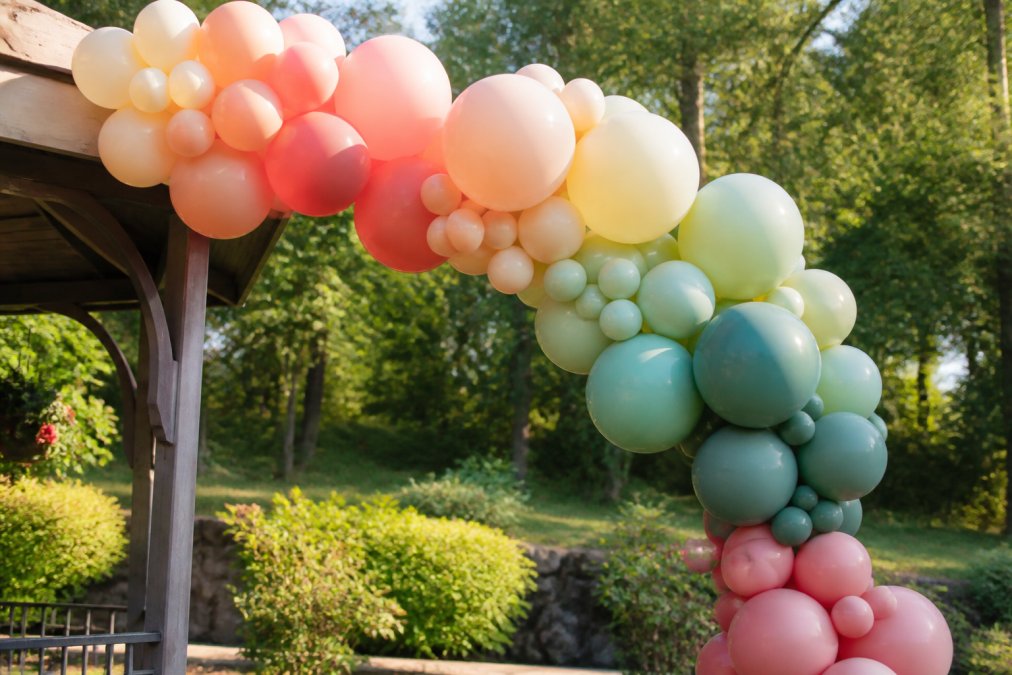
A balloon garland outdoors typically holds its shape for six to twelve hours in mild conditions, and as little as two to four hours in direct sun and heat. At And Why Not Balloons, we tell clients to expect a working window, not a guarantee, it depends on sun exposure, temperature, humidity, and balloon quality.
A spring or fall morning garland can look fresh from setup through teardown; a midday summer party on open pavement will deflate before the cake is cut.
| Condition | Realistic Outdoor Lifespan | Main Culprit |
|---|---|---|
| Shade, 65-75°F, low humidity | 8-12 hours | Slow oxidation |
| Partial sun, 75-85°F | 4-8 hours | UV exposure and heat |
| Full sun, 85°F+ | 2-4 hours | Thermal expansion and popping |
The most common mistake is installing a full-sun garland two hours before guests arrive. Schedule installation as close to the event as the venue allows.
How to Keep Balloons From Deflating in the Sun and Heat
The most effective way to keep balloons from deflating is to reduce heat gain and UV exposure: balloons are porous, so air escapes continuously and heat accelerates that loss.
Install in shade or create it with a canopy, set up as late as possible, use professional-grade latex, treat balloons with a sealant before inflation, and anchor the garland so wind cannot torque the frame. Air-filled garlands on a sturdy frame outlast helium outdoors.
Occupational safety guidance on heat and outdoor work conditions
Balloon Garland Oxidation Treatment: Protecting Shine and Color
Oxidation turns a glossy latex balloon dull and chalky: oxygen and UV light break down the latex surface, so a garland can still be inflated but look tired. Treatment slows it; nothing stops it entirely outdoors.
Interior sealants slow air loss; exterior shine sprays hold gloss and color. Together they buy extra hours in sun, not extra days.
Matte-finish balloons hide oxidation better than glossy ones. If your event runs long in full sun, a matte palette will look fresher in the final photos than a high-shine one.
How to Secure a Balloon Garland Outside
Securing a balloon garland outdoors comes down to wind resistance and structural integrity. A garland is a sail: once wind gets under it, the frame flexes, adhesive points fail, and balloons pop.
Use a weighted base or ground stakes rated for the surface, attach balloons to a rigid frame rather than to each other alone, reinforce every adhesive point, and keep the garland below the wind line. Above roughly 15 mph, even a well-built garland starts losing balloons, and adhesive failure at the frame is usually first.
National Weather Service wind speed and outdoor safety information
How Long Do Balloon Arches Last Outside?
A balloon arch outdoors lasts about the same as a garland, roughly two to twelve hours, but fails differently: it carries more load and surface area, so heat-related popping and wind torque hit it harder.
In cooler temperatures, latex contracts and the arch holds shape longer, though balloons look slightly smaller. Heat is the real enemy: direct sunlight on one side creates uneven thermal expansion that stresses the joints where sections meet.
Match your build to the forecast, not the calendar. A 70°F shaded morning and an 88°F sunny afternoon are two completely different installations, even in the same month.
Seasonal Considerations and Post-Event Cleanup
Seasonal timing shapes outdoor balloon decor more than any design choice: summer afternoons are hardest, spring and fall mornings most forgiving, and winter cold slows deflation but makes latex brittle if handled roughly.
Plan the teardown before the design. Latex balloons are not recyclable in most curbside programs, and popped fragments are a litter and wildlife hazard. A professional teardown collects every fragment, deflates reusable frames, and leaves the venue clean.
Environmental Protection Agency guidance on waste reduction and event cleanup
Outdoor balloon decor is a race against sun, heat, and wind, and the margin is thinner than most people expect. And Why Not Balloons builds every outdoor garland with professional-grade materials, backup supplies, and full setup and breakdown by CBA certified artists who have served the Upstate since 1997. We time installation to your event window so the garland looks its best when guests arrive, and we handle teardown so you never touch a popped balloon. Get started with And Why Not Balloons and let us turn your outdoor space into a legendary experience.
Frequently Asked Questions
Do balloon garlands last longer in the shade or sun?
Shade extends the life of an organic balloon garland outdoors. Direct sunlight and UV exposure speed up oxidation, causing latex balloons to lose shine and color. For outdoor events in Upstate SC, position garlands under a covered area or use a UV-resistant treatment to protect the balloons.
How does heat affect outdoor balloon garlands?
Heat causes thermal expansion in latex balloons, making them more prone to popping. When ambient temperature rises above 85°F, balloons can expand beyond their limit and burst. Humidity levels also play a role; high humidity can cause balloons to appear cloudy. To keep balloons from deflating or popping, install garlands early in the morning or late evening and avoid direct sun during peak heat.
What is the best way to secure a balloon garland outdoors?
To secure a balloon garland outdoors, ensure it is anchored to stable structures. For windy areas, consider additional tie-downs to maintain structural integrity. Avoid tape alone, as it can fail in heat or humidity. If you’re securing a balloon garland outside on a windy day, check wind speeds: above 15 mph, consider moving the installation indoors or adding extra tie-downs to maintain structural integrity.